Financial Benefits of Retirement Living: Is It Worth the Cost?

When researching retirement living, also known as independent living, many people wonder about the financial implications of the decision. Retirement living offers some key financial benefits, primarily including:
- More predictable monthly expenses
- Fewer, if any, home maintenance and repair costs
- Reduced transportation expenses
- Included amenities, activities and services (and sometimes dining)
- Access to multiple levels of support in many communities
- More time to enjoy retirement without managing a home
- Learn more about the financial benefits of Concordia retirement living
- FAQs about the financial benefits of retirement living
Click the above links to jump to the corresponding section.
How Does Retirement Living Make Monthly Expenses More Predictable?
By offering a simplified payment structure, retirement living offers predictability in a sea of financial uncertainty.
Nobody likes bills. The seemingly endless stream of cost statements feels like a threat to financial stability. Price increases, rate changes and inflation adjustments make the pesky papers more menacing.
Retirement living consolidates many of the routine bills and payments into one predictable monthly payment. Some bills that could be combined or eliminated include:
- Property taxes
- Homeowners Insurance
- Utilities
- Electric
- Heating/cooling
- Internet
- Basic Cable
- Maintenance and repairs
- Lawn care, landscaping and snow removal
Combining these expenses can help residents with their budgets. With fewer fluctuating bills, residents can rely on a consistent monthly rate for a clearer understanding of their expenses.
“Residents love that their overall cost of living goes down due to downsized living space and consolidated utilities,” said Connor Hagey, director of retirement living for Concordia.
It should be noted that every community structures its pricing differently, and some communities may charge for additional services or packages. When researching retirement living, it’s a good practice to compare what’s included in a monthly rate while also looking at expenses as a homeowner. Use an itemized list to help compare the two settings.
Click the button below to view an example of a retirement living cost comparison from Concordia Haven Retirement Apartments.

Can Independent Living Residents Save on Maintenance and Repair Costs?
Expect the unexpected. Retirement living can help alleviate the surprise nature of these costs by including many major maintenance services in their monthly rates.
Homeowners cannot always anticipate when an appliance fails, a basement floods or a major repair becomes necessary. Yet, many homeowners know and expect these types of costs every year, and it factors into the cost of aging at home.
According to the American Housing Survey, costs of maintaining a home have soared. According to its data, between 2017-2019, the median cost of maintaining a home was around $4,400 annually. The same data shows a median annual cost at $6,500 between 2021-2023.
“Since then, costs have climbed due to inflation and supply chain disruptions,” said a report by ConsumerAffairs. “It’s typical for homeowners to budget between 1% and 4% of their home’s value for maintenance each year.”
A roof replacement, heating system repair or plumbing emergency can quickly affect a retiree’s budget in a big way. That’s why even owning a home outright and living mortgage-free can still require significant spending. The following is a list of big-ticket home maintenance costs and suggested cost ranges from ConsumerAffairs:
- Roof replacement: $5,800 to $13,000
- HVAC system replacement: $10,000 to $14,000
- Foundation repair: $4,000 to $30,000
- Sewer line replacement: $5,000 to $30,000
- Major electrical upgrades: $1,200 to $10,000
- Mold remediation: $1,800 to $8,000
- Septic system repair: $630 to $3,000
- Water damage restoration: $1,300 to $6,300
In a retirement living community, many exterior and interior maintenance responsibilities should be handled by the community’s maintenance staff. Many maintenance tasks from replacing or fixing broken appliances to hanging new shelves are often incorporated into a resident’s monthly fee.
“In a lot of cases, annual Cost of Living Adjustments are typically less than a single-family home,” said Connor.
While Concordia covers nearly all interior and exterior maintenance at its communities, some other communities may require some additional fees for going above and beyond.
Understanding what incidents are covered is another important question to ask admissions counselors.
Do You Need a Vehicle as a Retirement Living Resident?
One of the biggest lifestyle changes that can quickly become a boon for retirement living residents lies in transportation.
According to U.S. Bureau of Transportation statistics, the average cost of gas and maintenance of a vehicle in 2025 was around $3,605. That doesn’t include the cost of insurance, license, registration, taxes, depreciation and loan/lease payment, which averaged around $7,973. That’s a rough total of $11,578 as an annual average cost of owning/leasing and operating a vehicle.
For homes with two or more vehicles, these costs compound, reaching greater heights.
Many retirement living communities offer transportation to residents beyond medical or health care related transportation. Many shuttle residents to various offered activities. They also usually offer travel to frequently visited destinations such as:
- Grocery stores
- Shopping centers
- Banks
- Restaurants
- Hair salons/barbers
Residents who use their community’s transportation service can reduce the number of vehicles in their household or even eliminate them entirely. But even residents who keep their vehicles can benefit by reducing mileage and extending the life of their cars.
Driving can be fun for some residents, and in an independent living setting, they’ll have the freedom to drive to their heart’s content. But for those who couldn’t care less, being driven around can feel like a relief.
How Do Amenities and Activities Affect Retirement Living Finances?
When thinking about cost savings, transportation sounds like one of the biggest, but retirement living offers cost savings for other services too—even fun ones.
Some retirement communities can offer replacements through their amenities and scheduled group activities.
Some of those amenities include (a Concordia location that offers the listed amenity):
- Gift shop (Concordia at Arbutus Park)
- Fitness center (Concordia at Bethlen)
- Continental breakfast (Concordia of Bridgeville)
- Lifelong learning opportunities (Concordia at Cabot)
- Theater room (Concordia at Kennedy)
- Concierge services (Highpointe at Rebecca Residence)
- Business/computer center (Concordia at RP Home)
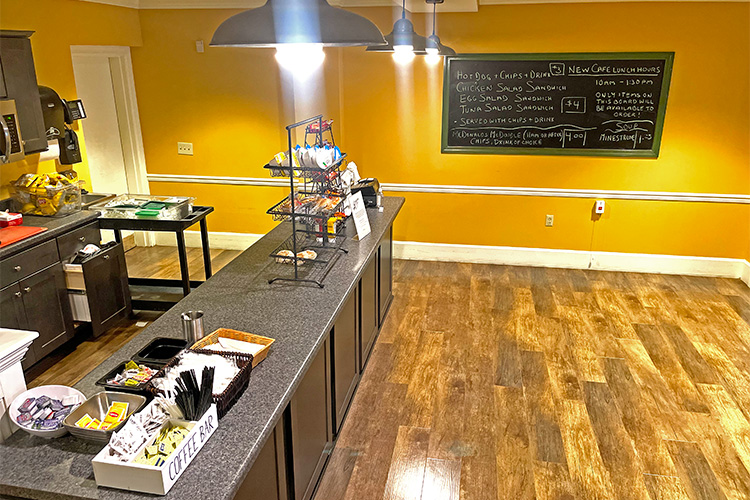
- Café (Concordia of the South Hills)
- Indoor pool (Concordia at Sumner)
The list of amenities varies location by location, and a prospective resident should look to align the offered amenities with their interests. Using the above examples, someone who loves coffee might gravitate toward Concordia of the South Hills as a better value.
In addition to amenities, retirement living communities often offer many included or reduced-cost activities, including concerts, festivals, educational trips and group trips to local attractions, among others.
Every cost reduction adds to the overall value of retirement living. Also, making wonderful connections through socializing with neighbors can border on priceless.
Is There a Health Care Component to Independent Living?
While health care is not included in independent living at most communities, the flexibility of accessing care can easily provide its own value. Also, some retirement living communities offer health care-adjacent services and programs that provide a more tangible value.
While it’s not inherently built into the cost of retirement living, health care becomes a little easier when you live in a Continuing Care Retirement Community (CCRC).
CCRCs allow for an easy transition from independent living to short-term rehabilitation, personal care, assisted living, memory care and long-term nursing care. Not all services within a CCRC require movement between buildings either.
Many of Concordia’s retirement living communities, even those that aren’t full CCRCs, facilitate home health options, such as Concordia Visiting Nurses.
There could also be some health-adjacent cost savings in the retirement living setting. These include things like:
- Trips to scheduled doctor’s appointments
- Emergency response systems and support
- Health education programs
When it comes to the health care benefits of retirement living, the true value comes in the security of knowing you can get most of your care on the same campus. It’ll also be much easier for spouses, family and friends to visit and provide emotional support.
“One of the biggest pieces of financial peace of mind comes with knowing you’re in a place that commits to caring for you and looking out for you and supporting you as your needs change,” Connor said.
Is There Value Beyond Financial Savings in Retirement Living?
Some may balk at the monthly fees without truly considering the value of the savings offered.
Considering all the perks of retirement living, residents may save thousands of dollars that could go toward living life to the fullest.
For those amounts, they could buy into a new hobby, see the world or tag along for a vacation with their grandchildren.
While retirement living may save residents money, retirement living can also provide something equally valuable: time.
Families, hobbies, passion projects and more—as residents continue to age, they’ve accumulated so many things to occupy their time.
Retirees shouldn’t have to squander their hard-earned free time with more of the same mundane tasks and bills they’ve dealt with most of their lives.

How Can You Learn More About the Financial Benefits of Independent Living?
The financial benefits of retirement living extend beyond a monthly price. Predictable expenses, reduced maintenance, convenient services and access to engaging activities can all contribute to greater confidence and peace of mind.
It’s important to factor all of these items into your retirement living consideration. Ask admissions counselors for the fees and rates you care about now, and some that you might care about down the road.
Concordia prides itself on transparency, posting rates transparently on our website. You can take a closer look at what these rates look like by checking out the web pages of one of our retirement living communities.
Click here to view all the communities that offer retirement living.
Frequently Asked Questions About Retirement Living Costs
Are retirement living fees fixed, or can they increase?
Retirement living fees may increase over time due to inflation, operating expenses and expanded services. Ask each community how often rates are reviewed, what previous increases have looked like and how residents are notified of changes.
What additional fees should I ask about?
Ask whether the community charges separately for guest meals, salon services, pet care, additional housekeeping, maintenance requests, storage, premium activities or higher levels of support. Request a complete fee schedule before making a financial comparison.
What Is a Retirement Living Fee Schedule?
A retirement living fee schedule is a document that lists the community’s current charges for housing, services, amenities and optional features. It may include the monthly apartment rate, entrance or community fees, meal plans, housekeeping, pet fees, guest meals, storage, activities and additional support services.
Does retirement living require an entrance fee?
Some retirement communities require an entrance fee, while others operate under a monthly rental structure. Entrance-fee communities may offer different contract options, services or access to future care. Carefully review refund provisions and contract terms before making a decision.
How can I accurately compare retirement living with staying at home?
Calculate your total annual cost of living at home, including routine bills, maintenance, repairs, groceries, entertainment, services and unexpected expenses. Compare that figure with the community’s annual fees and included benefits rather than comparing only your mortgage or rent with its monthly rate.
When should I begin planning financially for retirement living?
Begin researching well before an immediate move is necessary. Early planning gives you more time to compare communities, understand pricing structures, evaluate available apartments and prepare for moving expenses. It also allows you to make a confident decision based on your preferences rather than an urgent need.
What financial documents might I need when applying for retirement living?
If you’re much closer to making your retirement living decision, then let us help guide you with more help related to retirement living finances. Click the button below and fill out a quick form to receive a free financial document checklist that could be helpful as you begin applying for admission at a retirement living community.
Founded in 1881, Concordia Lutheran Ministries is a faith-based, CARF-accredited Aging Services Network and recipient of the inaugural Pennsylvania Department of Aging Excellence in Quality Care Award. As one of the largest nonprofit senior care providers in the country, the organization serves 50,000 people annually through in-home care and inpatient locations. Concordia offers a lifetime continuum of care that includes adult day services, home health care, hospice, physician and rehabilitation services, memory care, personal care, assisted living, respite care, retirement living, skilled nursing/short-term rehab, spiritual care and medical equipment.
Get Updates From Concordia
There is always a LOT happening at Concordia! Would you like to stay up-to-date with our news and events? Sign up for our monthly e-newsletter here.